
Surveillance Thunder and Ember #ALM102DC
- Hoang Viet Nguyen
- Apr 30, 2024
- 4 min read

Updated: May 20, 2024
TOPIC: Surveillance
The goal of this video is to attract people's attention towards surveillance through the use of imagery, film, and sound. I'm making this to show that people can protect themselves if given a reason.
My intended audience is everyone, no matter their age or sex. My audience's main consumption patterns are TV and social media. There isn't one specific influence, as I'm targeting anyone and everyone since that is how large and powerful surveillance is. Normally, what would make them happy is the time they spend doing leisure activities, which can be monitored through CCTV on building sites, roads, and on any digital devices.
My objective is to persuade my audiences, as currently not many know much about surveillance, its impact, or its threat, and yet for how long it has already existed, no one has ever said anything as if it is a common thing in our daily lives for our data, our own identity, and our future children, friends, and family to be watched and controlled.
To persuade them to change their attitudes and behaviours,
I use footages as my call to action, After they watches my video I hope they can be cautious about surveillance and try to limit their data being spread online or to the public.
Throughout my video, I have chosen to express my concerns about surveillance through mostly footage, SFX using 3 different sections as 3 different indicators to 3 things I wanted to say, and music to make my audiences feel the danger and need for surveillance rather than just listen to it and forget about it the next day. The message I hope they get out of this is to fear the danger of surveillance but don't cower down by it, but to be informed about surveillance and then take control of their own data from being used against their will.
o Strategies relating to planning, editing, selection of source material, use of overlays, juxtaposition of image and sound, use of music, and so on that you employed in your video (approx. 300 words)
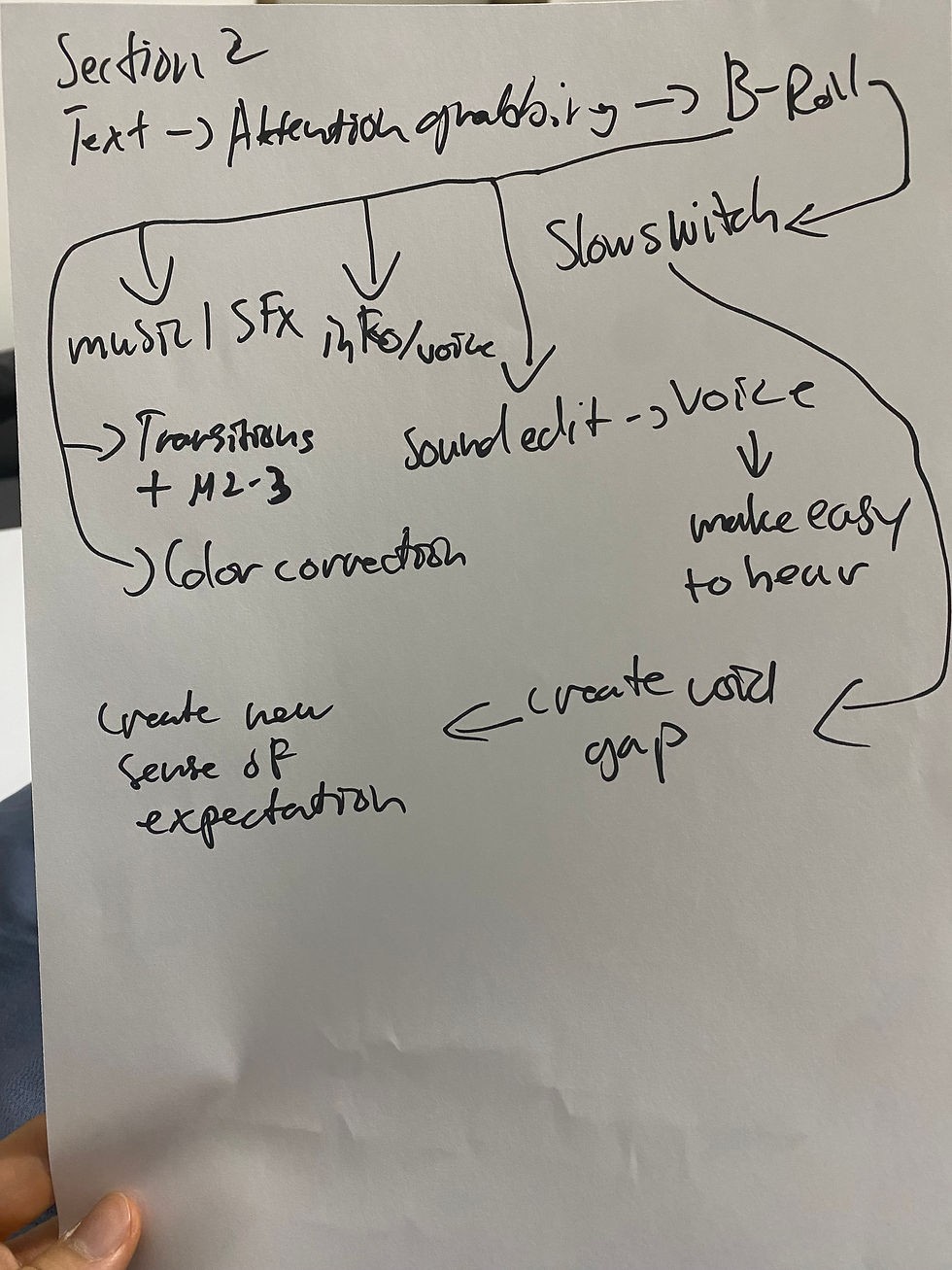
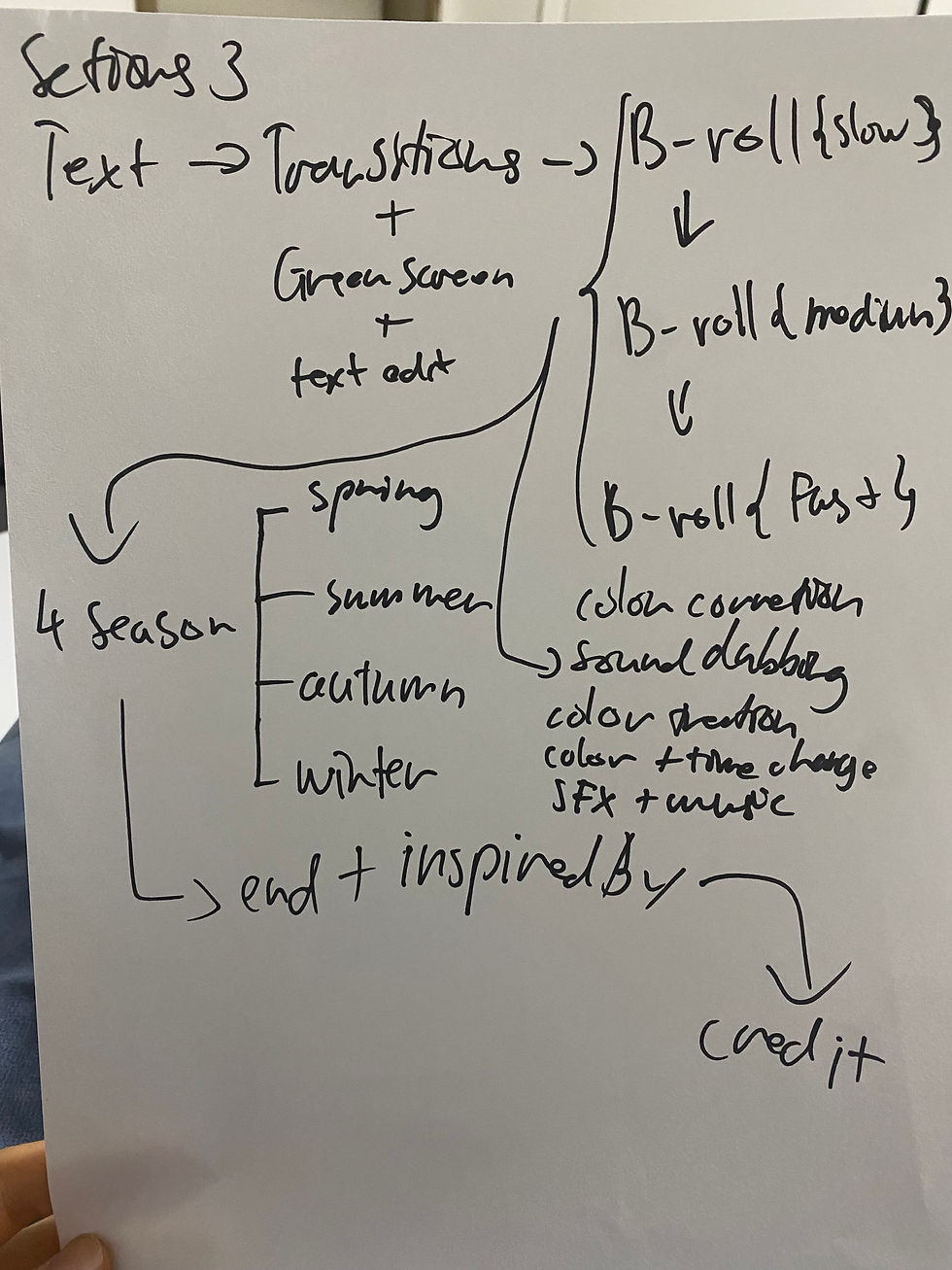
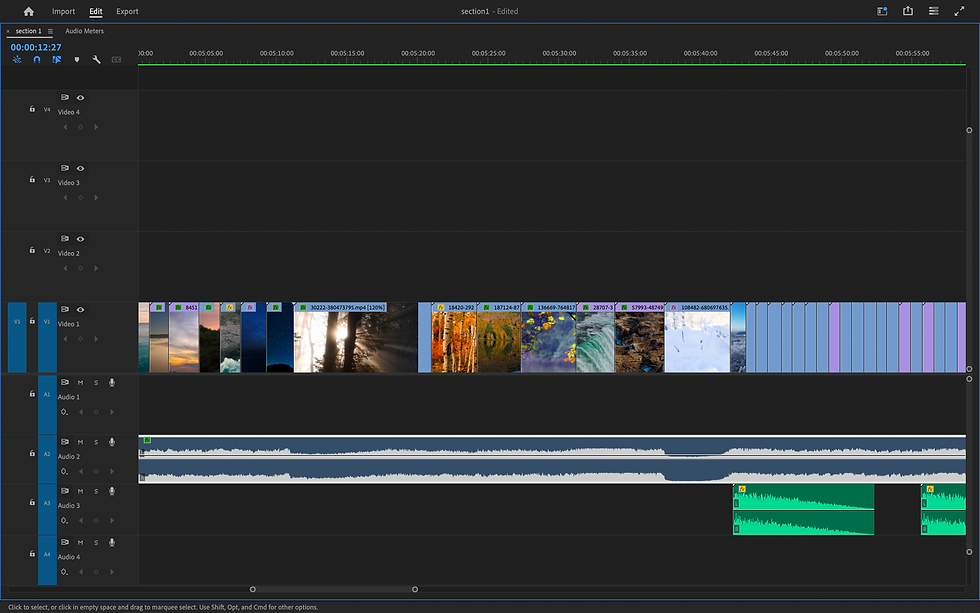
I divided my video into three sections. The first section is to grab my audience's attention. I use mysterious, scathing, or eerie music under the text questioning, "ARE YOU BEING WATCHED?" This would create a tense atmosphere but also make them question, 'Who are watching me?' using multiple scenarios like a forest -> deforestation/barrand land and a normal city -> destroy city to convey my message that surveillance is dangerous and could cause irreversible damage, and I achieved this with the help of the music and SFX. The second section is about informing. Throughout the section, I talk briefly about surveillance, but I don't want to give much information since it's not going to make my audience remember. I even purposely didn't reduce the music too much just so I could make my audience focus more on visuals. However, this is also a two-way trick; for those who really wanted to listen, they would rewind and go back to listen to the information I said. For section three, it's all about timing of visuals and music. If you watch the third part right after 'light up your passion' which is meant to be a motivation to those under surveillance, and I wanted to give them reason to take back control, I'm reaching this result by matching my video to my music and inputting footage that resembles the four seasons of the year: spring, summer, fall, and winter, to symbolise the passage of time with a pace of slow -> medium -> fast (tempo and pace of video|see video or picutre down below) to tell them that time changes fast saying that the environment around you is always changing, and you might not be noticing it. Although the SFX and music are easy to find (not for the footage), editing the colour correction is a hassle as I have to edit around 40 ideos. Each section brings a different expectation, emotion, and reaction.
o Lessons you learned, challenges you encountered, and how you resolved any problems you faced (approx. 200 words)• You may use the first person (‘I’, ‘my’) when writing the reflection
Some challenges I have to encounter are colour corrections, finding enough video (roughly 40), and the hardest, which is the credit ending for the colour correction. It was difficult because I should have edited the colour and then cut the scene, but I didn't. Since it was simple enough to do, it just took more time than I originally anticipated. For sections 1 and 2, I was able to find enough footage easily; however, the third section alone took me 2-3 days to find barely enough footage. For the citation, I originally thought that it would be an easy task to do since I already did it last time and a few other times before, but this time I have around 90 references and sources/material, causing Adobe to not recognise it, and I wasn't able to input it in Adobe or any other platform, so I have to DYI it with a little bit of transition and 2 screenshots. I learned new techniques and ways to make my video better, such as using greenscreen using key, stabilising shots and footage that I took that were too shaky using warp, and a bunch of new methods to make my video look professional, like adding blank shot, turing up volume on purpose to overwhelm certain information that I wanted to capture my audience's attention (audio emphasis" or "audio ducking").
Planning

Section 1


Section 2


End of section 2 start of section 3




Comments